
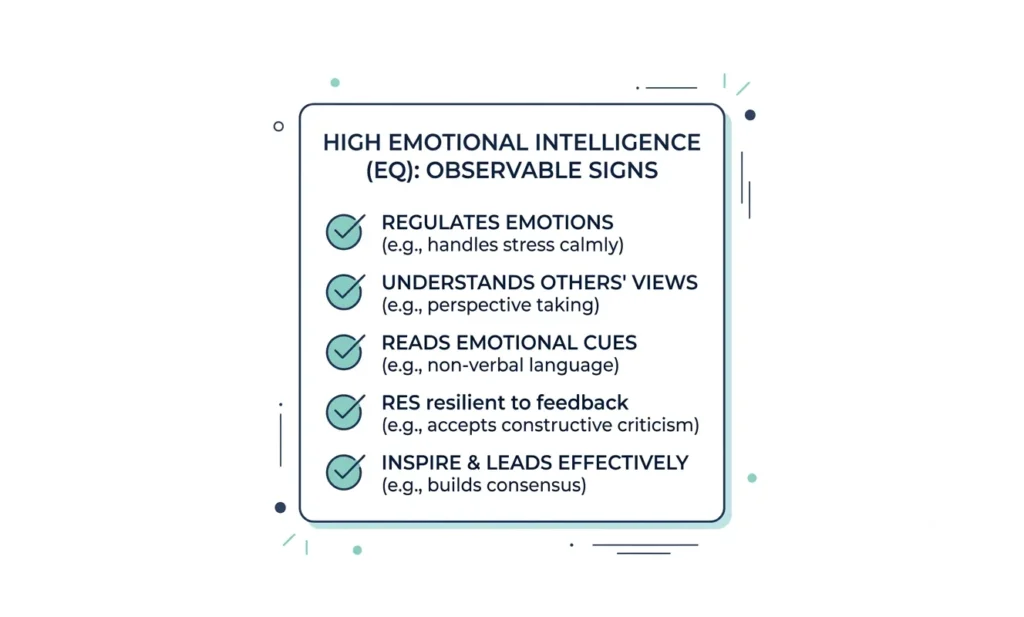
High emotional intelligence rarely announces itself. It shows up in small, easy to miss moments, staying calm during a tense meeting, noticing when a friend needs space instead of advice, or catching yourself before saying something you would regret. Because these signs are subtle, a lot of people underestimate their own emotional intelligence, or mistake being agreeable for actually having it.
This guide walks through the real, observable signs of high emotional intelligence, so you can honestly assess where you already stand and where there is still room to grow.
Why high emotional intelligence is often invisible
Emotionally intelligent behavior usually looks like the absence of drama rather than an obvious display of skill. A person handling conflict well often looks unremarkable in the moment, calm, measured, maybe even a little quiet, which is exactly why it gets overlooked compared to louder, more visible traits.
Sign one, you stay composed during conflict
Rather than becoming defensive or reactive when challenged, emotionally intelligent people tend to pause, absorb what is being said, and respond thoughtfully rather than firing back immediately. This does not mean suppressing frustration, it means not letting the frustration drive the response.
Sign two, you notice how other people are feeling without being told
This shows up as picking up on a shift in someone’s tone, noticing when a normally talkative person has gone quiet, or sensing tension in a room before anyone says anything about it directly.
Sign three, you take responsibility for mistakes
Instead of deflecting blame or making excuses, emotionally intelligent people tend to acknowledge their part in a problem clearly and quickly, which usually diffuses tension rather than escalating it.
Sign four, you adjust how you communicate depending on who you are talking to
Explaining the same idea to a stressed executive, a new employee, and a close friend usually requires different tone, pacing, and detail. Emotionally intelligent people naturally adjust for this without being asked, because they are reading the other person’s state as they communicate.
Sign five, you recover from setbacks without lingering resentment
Frustration and disappointment still happen, but emotionally intelligent people tend to process those emotions and move forward relatively quickly, rather than carrying resentment for days or replaying the situation repeatedly.
Sign six, you ask questions instead of assuming
Rather than assuming why someone acted a certain way, emotionally intelligent people tend to ask, directly or indirectly, before drawing conclusions. This single habit prevents a large share of unnecessary conflict.
Sign seven, you can sit with someone else’s discomfort without rushing to fix it
When a friend or colleague is upset, the instinct for many people is to immediately offer solutions. Emotionally intelligent people are more likely to simply listen first, recognizing that being heard often matters more in the moment than being fixed.
Real life example, how noticing a quiet shift changed a friendship
Sara noticed that her friend Ana, usually talkative during their weekly calls, had become noticeably quieter over several weeks. Rather than assuming Ana was simply busy, Sara gently mentioned what she had noticed and asked if everything was okay, without pushing for details.
Ana later said that small moment mattered more than she expected. She had been struggling with a health scare she had not told anyone about, and Sara noticing before being told anything made her feel safe enough to eventually share it. The entire interaction lasted less than a minute, but it reflected several signs at once, noticing an emotional shift, asking instead of assuming, and creating space rather than rushing to fix anything.
Your self check plan for the week
- Step 1: During one disagreement this week, notice whether you pause before responding or react immediately.
- Step 2: Pick one conversation where you consciously ask a clarifying question instead of assuming intent.
- Step 3: Notice one moment where someone’s tone or energy shifted, and gently check in rather than ignoring it.
- Step 4: At the end of the week, write down which signs from this guide showed up naturally and which ones took effort.
Common mistakes when self assessing emotional intelligence
- Confusing being agreeable or conflict avoidant with genuinely having high emotional intelligence
- Assuming a naturally calm personality automatically means strong emotional regulation
- Overestimating empathy based on good intentions rather than actual accuracy in reading others
- Judging yourself only on good days instead of how you handle genuinely difficult moments
These signs only make sense in the context of the broader concept. The complete guide to what is emotional intelligence breaks down the five components that these signs actually come from.
If you are curious how these signs translate into real world outcomes, emotional intelligence vs IQ looks at why these traits often predict success more reliably than cognitive ability alone.
For a clearer contrast, signs of low emotional intelligence and how to spot them covers the opposite end of the spectrum, useful both for self reflection and for recognizing patterns in others.
Recommended resources
A couple of resources for going deeper into self assessment:
Gives a more structured, scored version of the self check described in the action steps above.
Useful for tracking which signs show up naturally over time versus which ones still take conscious effort.
Frequently asked questions
What is the clearest sign of high emotional intelligence?
Staying composed and thoughtful during conflict, rather than reacting defensively, is one of the most consistently observed signs across research and real world behavior.
Can someone be introverted and still have high emotional intelligence?
Yes. Emotional intelligence is unrelated to introversion or extroversion, quiet people can be highly attuned to others’ emotions and just as skilled at managing their own.
Does being nice mean someone has high emotional intelligence?
Not necessarily. Kindness can exist without accurate emotional understanding, and genuine emotional intelligence sometimes requires direct honesty rather than simply being agreeable.
How can I tell if my own emotional intelligence is actually high or just assumed?
Honest feedback from people who have seen you under real stress or conflict tends to reveal this more accurately than self assessment alone.
Are these signs something people are born with?
No. While some people develop them earlier through upbringing or experience, all of these signs can be intentionally built through practice at any age.
Is it possible to show these signs at work but not at home, or the other way around?
Yes, this is common. Emotional intelligence can be context dependent, which is exactly why self reflection across different areas of life matters.
High emotional intelligence rarely looks dramatic. It looks like pausing before reacting, noticing a shift in someone’s tone, and taking responsibility without being asked. If several of these signs already feel familiar, you likely have more emotional intelligence than you give yourself credit for. If they do not yet feel natural, each one is a specific, practicable skill rather than a fixed trait.